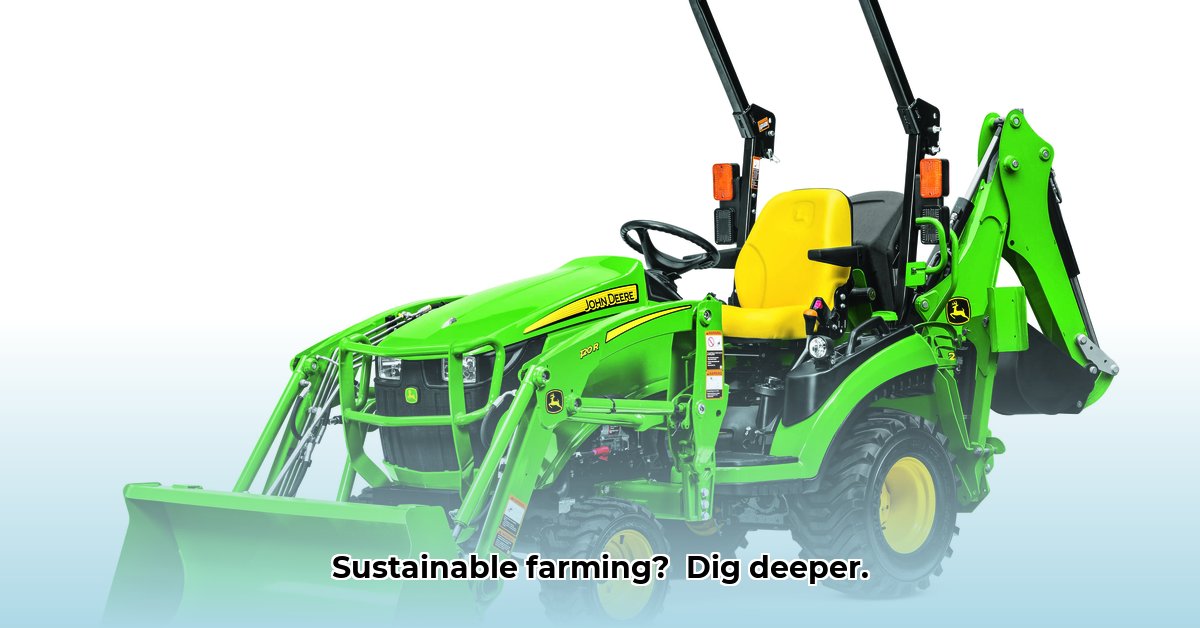
Digging Tractor Technology: A Sustainable Farming Revolution
Farming is evolving, and so is the technology we employ. Modern digging tractors are revolutionizing sustainable agriculture, offering precision and efficiency previously unimaginable. These aren't your grandfather's tractors; they're equipped with advanced technology to minimize environmental impact while maximizing yields. But how do they do it? For pricing insights on used Kubota tractors, check out this resource.
Precision Farming: Doing More with Less
Fuel costs are rising, and environmental concerns are paramount. Precision farming, enabled by GPS-guided systems and other intelligent technologies, addresses these challenges directly. These systems precisely guide tractors, optimizing fertilizer and chemical application, eliminating wasteful overuse. This targeted approach drastically reduces chemical runoff, protecting water quality and the environment while improving resource efficiency.
Consider this: instead of blanket application across an entire field, precision digging tractors apply inputs only where needed. This focused approach saves money on supplies, minimizes environmental impact, and potentially boosts yields. While initial investment can be substantial, many farmers report long-term savings outweighing these costs, particularly on larger farms. Smaller farms might explore cooperative purchasing or government subsidies to make these technologies more accessible. The question becomes not can we afford this technology, but can we afford not to?
Beyond the Plow: The Versatile Post-Hole Digger
Modern digging tractors frequently include post-hole digger attachments, expanding their versatility beyond tillage. These attachments are instrumental in sustainable practices like installing fencing, establishing windbreaks, and planting trees – actions crucial for soil health and biodiversity. Think of the time saved compared to manual labor when creating a large windbreak or starting an agroforestry project. It’s a game-changer for time management and project completion.
However, it's crucial to consider potential drawbacks. Heavy machinery can compact soil if used improperly, negatively impacting water retention and nutrient uptake. Choosing the right post-hole digger and tractor for your soil conditions is critical to mitigate this risk. Ongoing research into the long-term effects of digging tractors on soil health and the ecosystem is vital.
How to Minimize Soil Compaction Using Post Hole Diggers in Sustainable Farming
Soil compaction, the compression of soil particles, reduces pore space and hinders water infiltration, root growth, and soil health. This is especially detrimental to sustainable farming, which prioritizes healthy, productive land. Conventional tillage often worsens compaction. This is where post-hole digging can play a crucial part.
Precision Planting with Post-Hole Diggers: A Targeted Approach
Post-hole diggers offer a surprisingly effective method for minimizing soil compaction during planting. By creating small, precise holes for seed placement, they minimize soil disturbance and promote direct seed-to-soil contact, leading to improved germination. This targeted approach is beneficial for small-scale farms, no-till systems, and challenging terrains.
Steps for Minimizing Soil Compaction During Planting
- Site Preparation: Conduct a pre-planting soil test to assess suitability and determine optimal planting depth; avoid digging in extreme weather conditions.
- Digging Technique: Choose an appropriately sized digger for your soil and physical capabilities; maintain consistent depth and spacing; avoid excessive force.
- Seed Placement: Carefully place seeds at the recommended depth and gently tamp the soil, avoiding over-compaction.
- Post-Planting: Apply mulch to retain moisture and protect soil structure; avoid heavy equipment near recently planted areas.
- Scalability: Manual diggers suit small-scale operations best; larger farms may benefit from hybrid methods or automated technologies.
Maximizing the Benefits: Tips and Techniques
- Soil Type: Adjust digging depth based on soil type (e.g., sandy vs. clay).
- Cover Crop Selection: Choose cover crops suited to your climate and soil.
- Spacing: Proper spacing between holes is vital for optimal growth.
- Ergonomics: Employ proper lifting techniques and take frequent breaks when using manual diggers.
Putting it All Together: Actionable Steps for Sustainable Success
For Farmers:
- Funding: Research government grants, subsidies, and loan programs available for sustainable agricultural equipment.
- Training: Invest in comprehensive training on operating and maintaining advanced machinery and precision agriculture technologies.
- Collaboration: Explore cooperative purchasing with neighboring farmers to share costs.
- Equipment Selection: Carefully choose post-hole diggers suitable for your soil type and farm size.
- Agroforestry: Utilize post-hole diggers for efficient planting of windbreaks and trees.
For Equipment Manufacturers:
- Accessibility: Develop affordable, robust digging tractors for various farm sizes and soil types.
- Sustainable Manufacturing: Implement environmentally friendly manufacturing processes.
- Compaction Minimization: Prioritize post-hole digger designs minimizing soil compaction.
- Farmer Empowerment: Offer comprehensive training programs and user-friendly manuals.
For Governments and Research Institutions:
- Research Funding: Increase funding for research on the long-term impacts of mechanized farming.
- Supportive Policies: Implement policies supporting sustainable agricultural technologies.
- Infrastructure: Invest in rural infrastructure for equipment maintenance and repair.
- Incentives: Provide incentives and subsidies to encourage adopting sustainable practices.
The future of farming is collaborative. By integrating sustainable digging tractor technology and embracing responsible resource management, we can build a more sustainable, productive, and environmentally responsible agricultural future.